
BNESIM Review: Is This The Cheapest Travel eSIM in 2026?
Looking for the cheapest travel eSIM in 2026?
As a full-time travel blogger, a reliable connection is a non-negotiable for me, and my backpacking ways mean that I’m always searching for affordable and flexible eSIM options.
For this BNESIM review, I tested connectivity across multiple locations in Guatemala and have compared the prices with other popular eSIM providers to show you how BNESIM performs.
In this guide, I’ll break down BNESIM’s coverage, pricing, and performance in Guatemala, as well as explore the innovative add-on features that make it an incredible option for digital nomads.
Keep reading to discover whether BNESIM is the best eSIM provider for your travels in 2026.
This is a sponsored post, and my BNESIM was gifted to me as part of this collaboration. That said, all opinions are 100% my own and based on my personal experience living in Guatemala. If you purchase through an affiliate link, I may earn a small commission at no extra cost to you.
Cheapest Travel eSIM? My Honest BNESIM Review
As a full-time travel blogger who regularly tests eSIM providers across Europe, Latin America, and the Middle East, reliable mobile data is a non-negotiable for me.
And as a budget backpacker, I’m always on the hunt for affordable eSIM packages that don’t compromise on speed or quality.
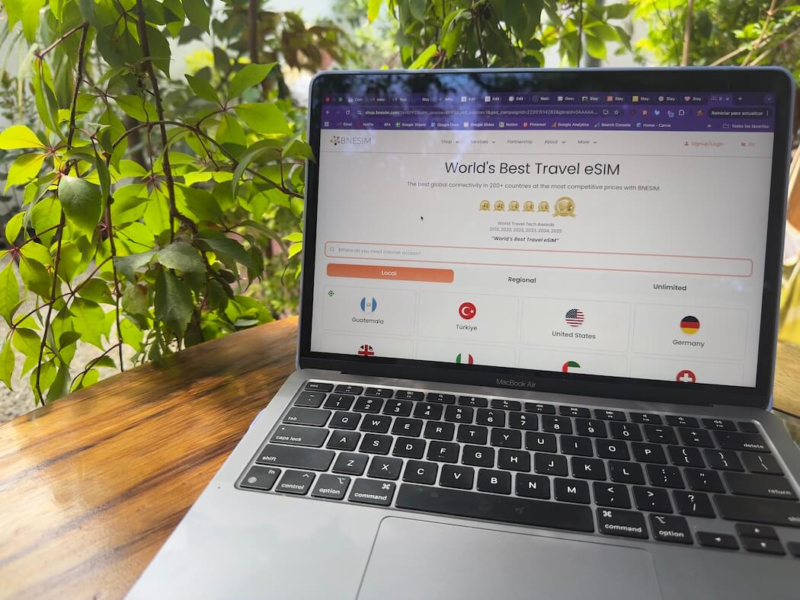
For this BNESIM review, I tested a 10GB package across multiple destinations in Guatemala, and the coverage was impressive, even in rural areas and at altitudes where I expected to lose signal entirely.
👉 Use code BIGBACKPACK for 10% off your first BNESIM purchase here
But is this the cheapest eSIM for travel in 2026?
If you’re traveling around Europe or Asia, BNESIM’s prices are aggressively competitive, especially for larger data packages.
Their non-expiry data plans also set them apart in a crowded eSIM market, with flexible options allowing you to keep a chunk of data on your account as an “emergency backup”.
However, in my own experience testing BNESIM across Guatemala, I found their local and regional Latin American prices to be notably more expensive.
💡Why the price jump in Latin America? BNESIM has “Tier-1″ Agreements with networks across the UK, Europe & Asia to guarantee you the best prices. But in Latin America, they don’t have that same direct relationship and have to pay more”middleman” fees.
Overall, the combination of fast, dependable connectivity and competitive prices makes them a strong contender for the cheapest travel eSIM in 2026.
What’s more, their optional add-ons (VPNs, international calls, Local ID), which I will go into more detail on below, make them a top choice for those wanting to maintain a professional presence on the road.
📌 Why choose BNESIM?
📶 Strong coverage in major travel destinations – Tier-1 agreements with top-tier providers (like Tigo & Claro in Guatemala) for reliable 4G/LTE and 5G
📊 Optional business add-ons – A full “Virtual Office” with built-in VPNs, international calling, and Virtual Local IDs for professionals
💰 Amazing value for plans in Europe & Asia (especially for larger data packages)
🏆 Best feature – You can buy a chunk of data that never expires, making it the perfect “emergency backup” eSIM to keep on your phone
⚠️ Slightly more expensive in Latin America & for global packages than other providers
How does BNESIM work?
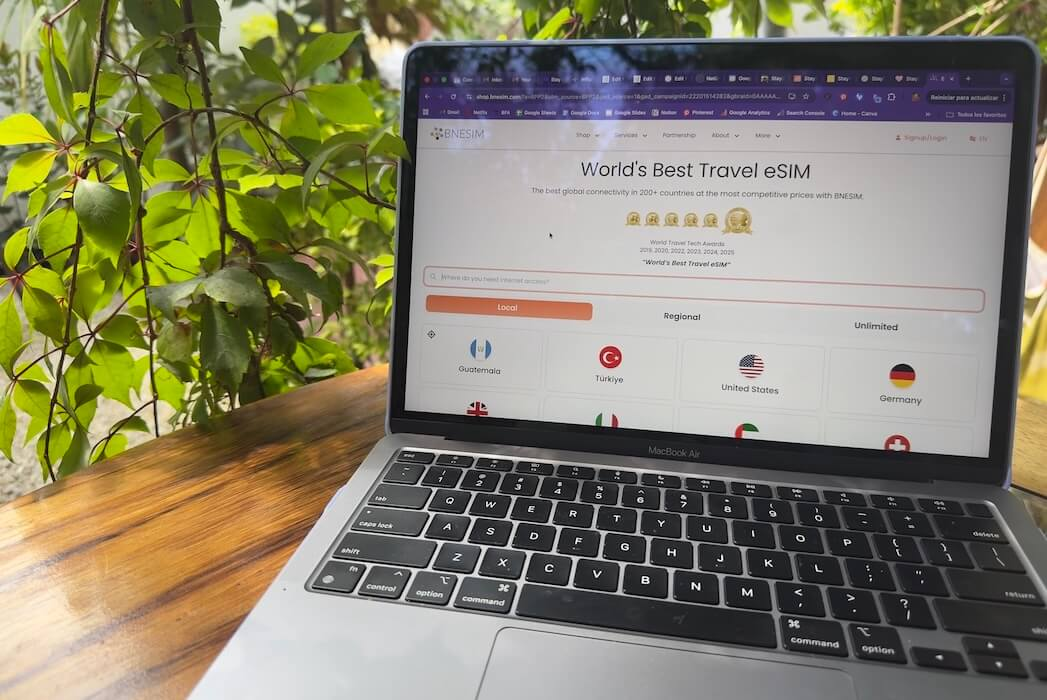
BNESIM is an eSIM provider that provides global connectivity in 200+ destinations at very competitive prices.
Instead of buying a physical SIM card in your destination, or dealing with ridiculous roaming charges, you simply download a digital eSIM (embedded SIM) onto your phone before travel.
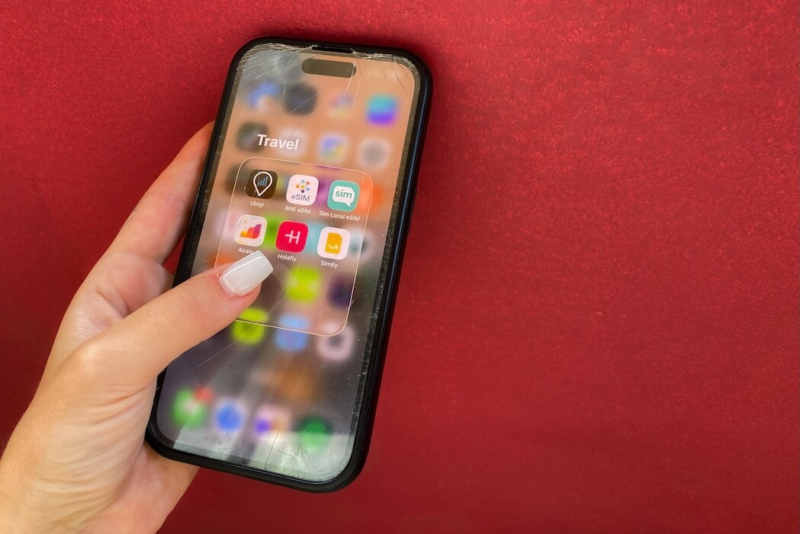
👉 Wondering how BNESIM compares to other eSIM providers? Check out my Best eSIM for International Travel guide here
Coverage & Plans
I’ve tested multiple eSIM providers over the years, and one thing I’ve learned is that coverage quality varies significantly depending on local network partnerships.
Many “budget” eSIM providers use low-priority roaming agreements. This means that consistent connectivity isn’t always guaranteed, whether in crowded tourist hotspots or more rural areas.
But this is where BNESIM stands out. Despite being one of the cheapest travel eSIM providers, their multi-network approach, backed by “Tier-1” agreements, makes them pretty reliable for high-speed connectivity.
In Guatemala, BNESIM partners with top-tier mobile networks like Tigo and Claro, and even in more rural areas, I was surprised that the LTE signal remained strong.
⚠️ Looking for flexible backpacker insurance? I personally use SafetyWing and couldn’t recommend them more for their affordability and flexibility. Get a quote below.
Local Plans
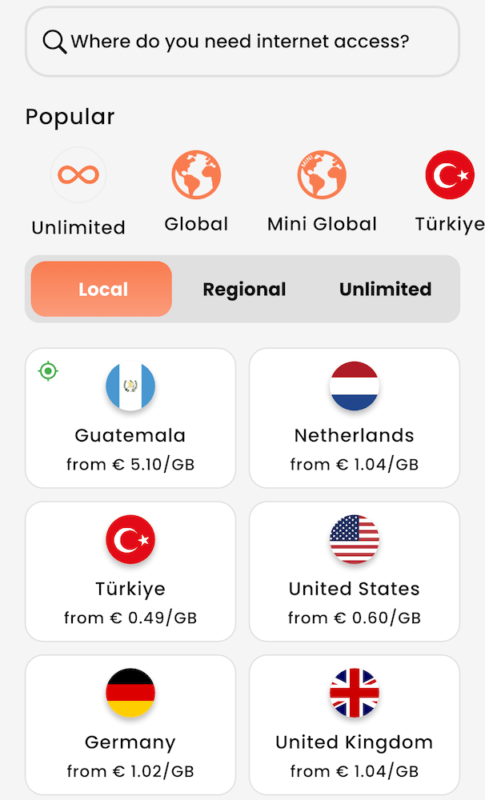
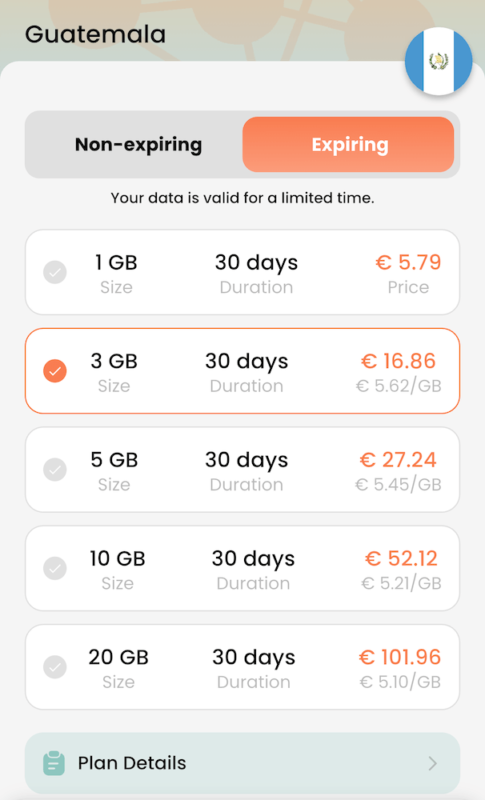
Local plans are perfect for short stays in one country.
- Short-term (1-30 days)
- 1GB – unlimited data
- I used a local plan during my trip to Guatemala
👉 If you’re a heavy data user, most local eSIMs come with the option of unlimited data at super affordable prices compared to other providers
Regional & Global Plans
Regional plans are best if you’re visiting multiple countries in one trip, but staying on one continent.
If you’re visiting multiple continents, I’d recommend a global plan instead.
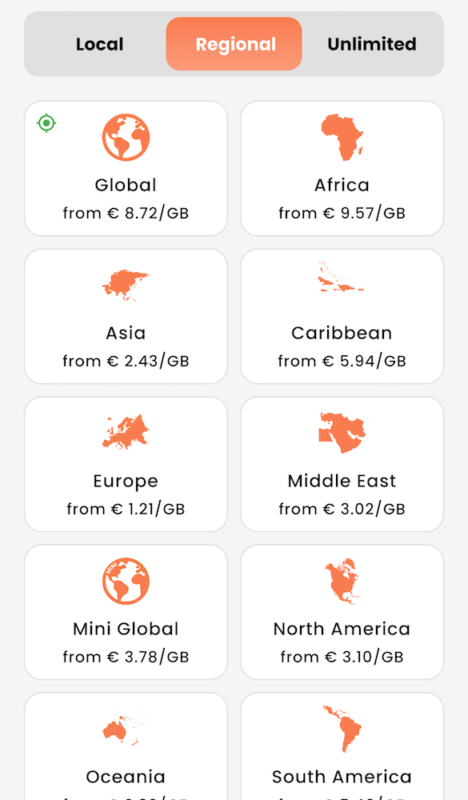
- Regional plans offered for Europe, the Americas, the Middle East, Oceania, Africa, Asia, & the Caribbean
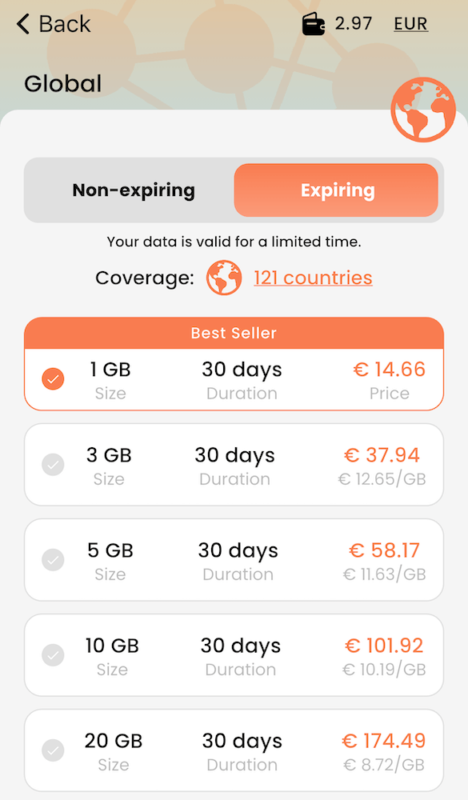
- Global plans include 121 countries, while Mini Global plans include 68 countries
- 1GB – 50GB
Non-Expiring Plans
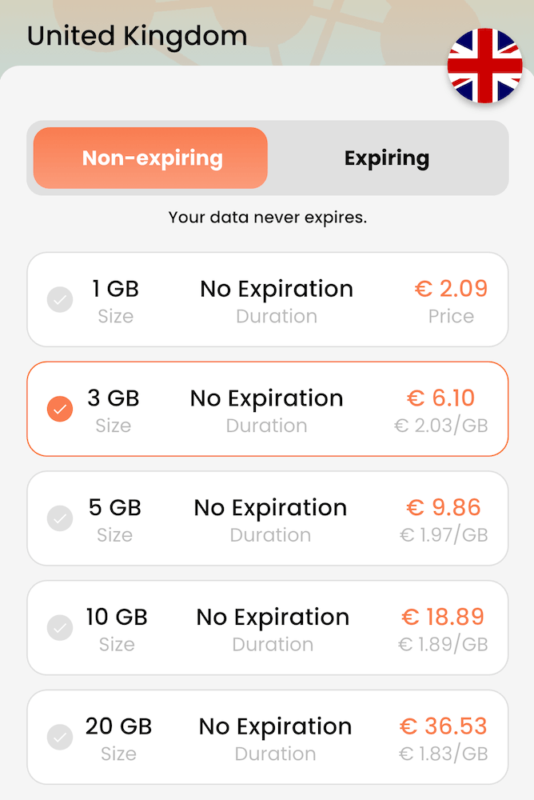
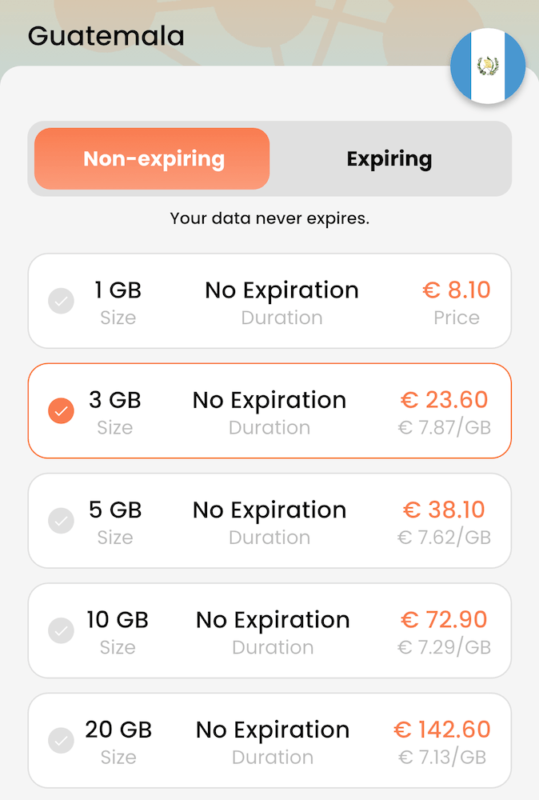
BNESIM’s non-expiry data plans are what truly set them apart in a busy eSIM market.
While most eSIM providers lock you into a 7-day or 30-day plan, BNESIM lets you buy a non-expiring chunk of data that you can leave on your phone until you’re ready to use it.
This is an absolute game-changer for frequent travelers, backpackers, and border-hoppers.
If you buy 10GB for your trip to Europe this month, but only use 2GB of it, the remaining 8GB will not expire and will remain on your account until you’re ready to use it again.
- Non-expiry data offered with local, regional & global plans
- Can keep a set amount of data on your phone for emergencies
Virtual Office: Calls, VPN & Local ID
BNESIM is more than your standard data-only eSIM provider, and also functions as a virtual office and one-stop communications solution.
But what on earth does that even mean? BNESIM essentially bridges the gap between data-only plans and a full-blown mobile workstation.
Their innovative add-on features make BNESIM a fantastic eSIM provider for digital nomads or those needing to maintain a professional presence while sipping cocktails on the beach.
I only used their BNESIM’s data-only plan, and didn’t try their Virtual Office myself, but here are some standout features –
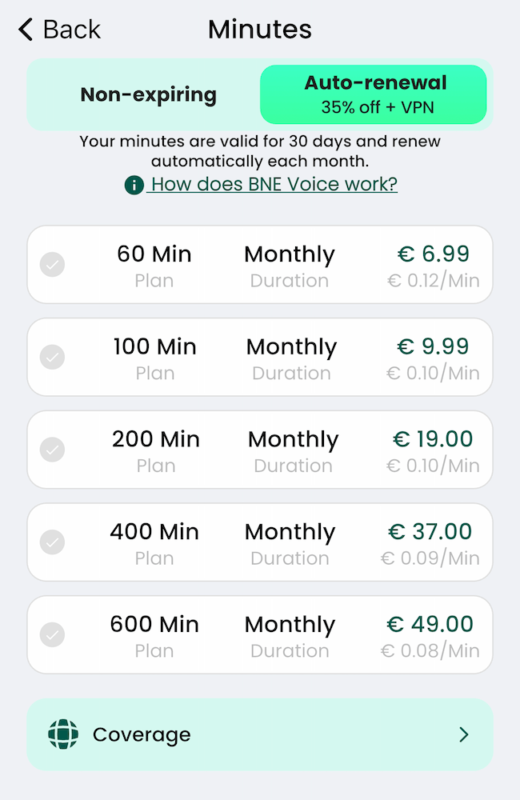
- Global International Calling – simply download the app and pay-per-minute. Use the built-in VoIP dialer to call landlines or mobiles in 200+ countries at local rates.
- Virtual Local Numbers – use a “Local ID” from 100+ countries to receive calls & messages – crucial for maintaining professionalism on the road & for those pesky 2FA SMS codes. You can use multiple at once.
- BNE Guard VPN – monthly plans for a battery-efficient VPN that encrypts your data on up to 5 servers – perfect if you want to avoid sketchy public WiFi
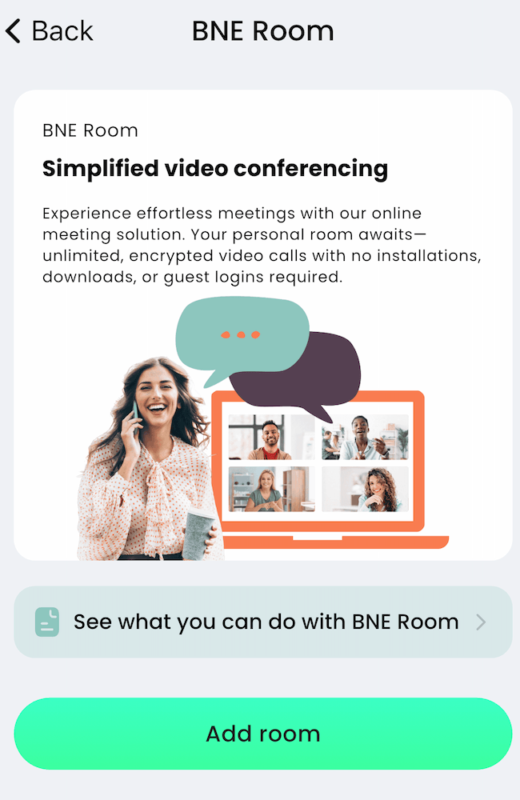
- BNE Room – free video conferencing & online meeting solutions
👉 Use code BIGBACKPACK for 10% off your first BNESIM purchase here
BNESIM Set Up (Step-By-Step Guide)
Setting up your BNESIM eSIM is very straightforward, and I’m going to walk you through it step-by-step.
I set mine up in about 5 minutes while waiting to board the bus from Belize in Guatemala.
I’d suggest setting up your eSIM at home before you travel, and it will automatically activate as soon as you arrive.
Step 1: Check your phone’s compatibility
Firstly, let’s make sure that your phone actually supports eSIM (most recent iPhone, Samsung, and Google Pixel models do).
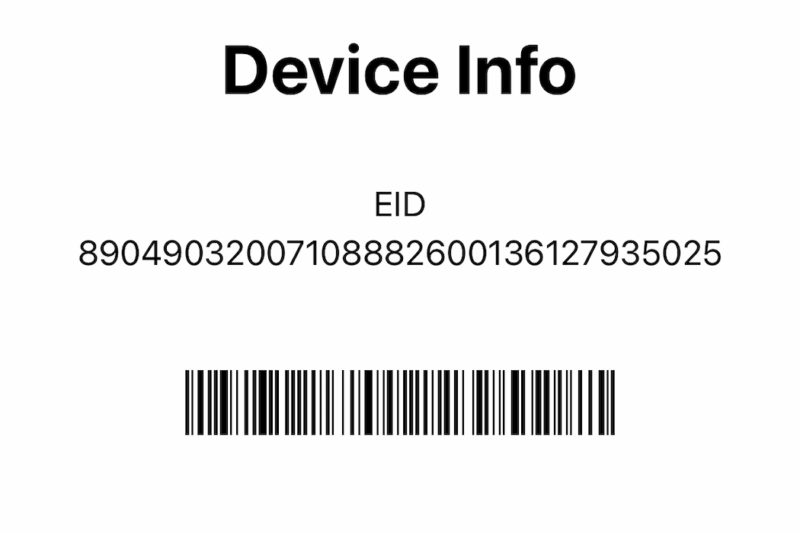
If you’re unsure, dial *#06# – if an EID code shows, your device supports eSIM. This is how it will look ⬇️
👉 You can also check out BNESIM’s full list of compatible devices here.
Step 2: Download the BNESIM app
Before you leave for your trip, either head to the BNESIM website or download the BNESIM app to purchase your plan.
You’ll need the app to manage your plan later on, so I’d recommend downloading the app and doing everything on there for ease.
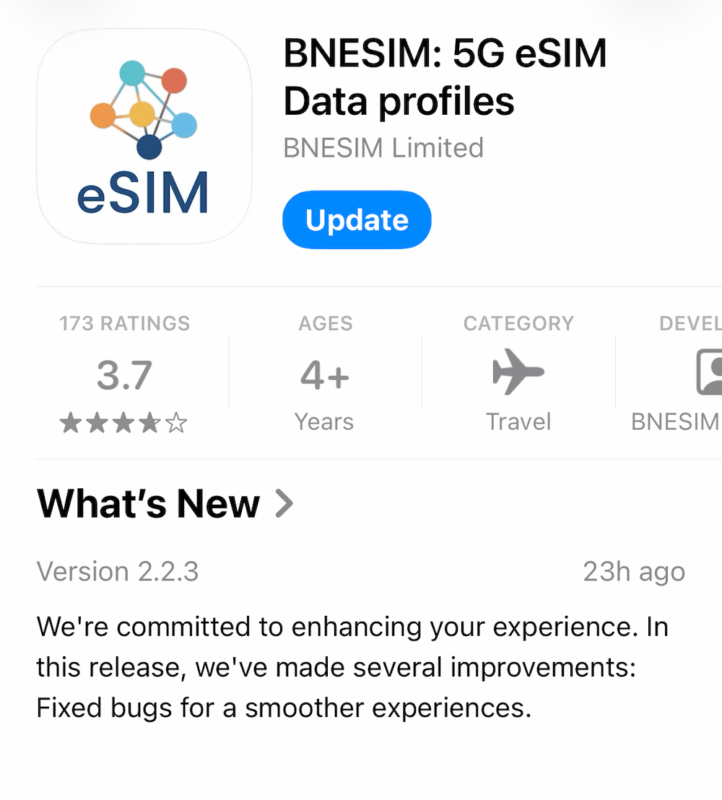
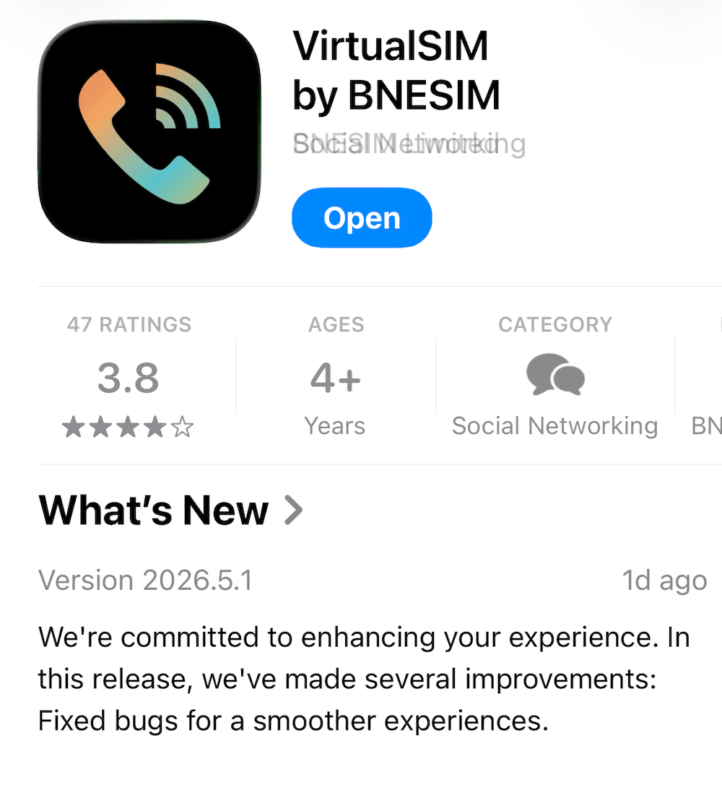
👉 BNESIM has two apps – if you want data-only, simply download the BNESIM app. If you want the added Virtual Office features, download the VirtualSIM by BNESIM app
Step 3: Choose your plan
Choose the plan that best suits your travel plans and itinerary.
Browse and choose your destination from the list of 200+ destinations, or if you’re visiting multiple countries, select the “Regional” option.
If you’re visiting multiple continents, check out the “Global” plans.
Depending on how much data you think you’ll use, choose the package that suits you best. They range from 1GB to unlimited data plans.
You also have the choice between expiring and non-expiring options, depending on how flexible you want to remain.
Step 4: Install BNESIM eSIM
Once you’ve made your purchase, keep an eye out for the email from BNESIM with the confirmation and installation instructions.
Before installing your eSIM, you need to ensure that you have a stable internet connection.
There are two ways to install your BNESIM eSIM –
- On the app – click on your newly-purchased eSIM, press the “install now” button & follow the step-by-step iOS instructions.
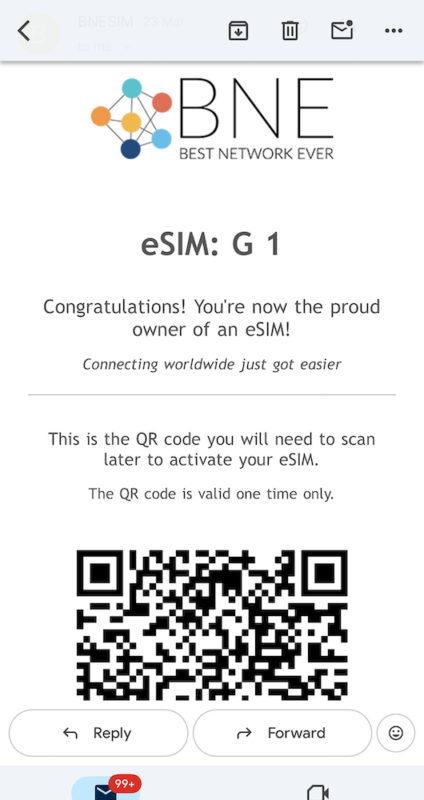
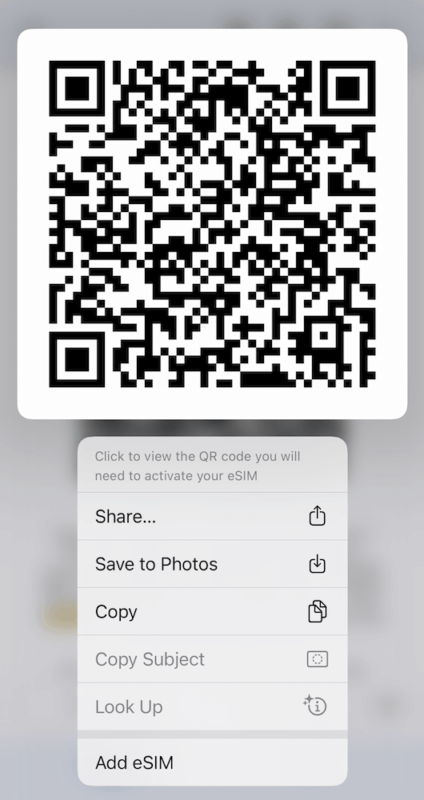
- Via email – you will receive a QR code in your email after purchase. Hold down the QR code in the email until you see “Add eSIM” & follow the iOS instructions (this is what I did).
Step 5: Activate your BNESIM
After installing, your phone will prompt you to activate your eSIM – I’d recommend doing this before travel.
To make sure it’s turned on, head to “Mobile Service” in your phone’s settings and find your BNESIM eSIM.
Slide the toggle to “Turn on this line” and your eSIM will be ready to connect once you arrive at your destination.
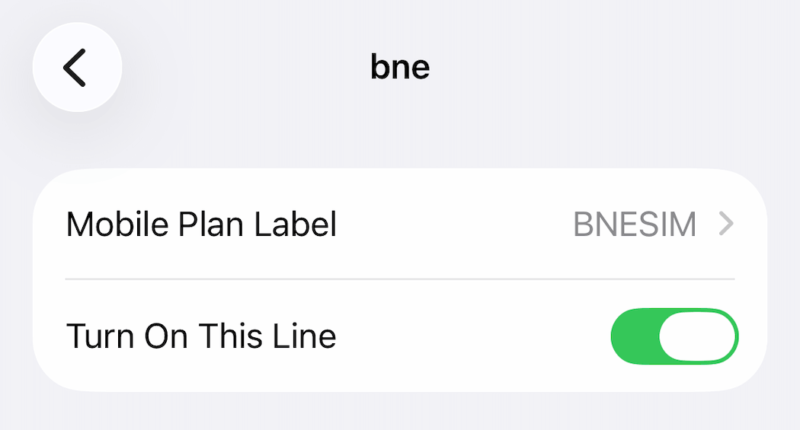
To avoid any complications, ensure that your phone is showing these settings –
- Make sure “Data Roaming” is switched on for the BNESIM eSIM – this will allow you to seamlessly switch to this network when it becomes available.
- Then, “Allow Mobile Data Switching” should be turned off. This will ensure it does not switch back to your primary number when you’re abroad, resulting in hefty roaming fees.
- Finally, be sure to choose a label for your eSIM to help you identify it. Your home number will show as “Primary”, and as you can see, I’ve changed my eSIM name to “BNESIM”.
Step 6: Start using your data
Keep your primary line switched on until you land in your new destination, before turning it off and leaving just the BNESIM line connected.
As soon as your phone detects the local network, it will automatically connect – woohoo!
💡If your eSIM is not working, try turning on Airplane Mode for 30 seconds or restarting your phone completely to refresh it
BNESIM Review: My Experience in Guatemala
I currently live in Guatemala, and recently tested the 10GB local plan for 30 days.
I simply downloaded the BNESIM app, and had my eSIM installed, activated, and ready to go in 5 minutes while I was waiting to catch the bus from Belize in Guatemala.
Considering how affordable BNESIM eSIM is, I was absolutely blown away by the strength and speed of the connection, from the jungles of Flores to the bustling Guatemala City.
BNESIM uses two main providers in Guatemala: Claro and Tigo. In my experience, Claro had faster speeds in the cities, while Tigo kept me connected while traveling through rural landscapes.
👉 Use code BIGBACKPACK for 10% off your first BNESIM purchase here
Keep reading as I break down how my BNESIM eSIM worked in different places in Guatemala ⬇️
Flores – Very Good ⭐⭐⭐⭐
Flores is an island located in the jungle of northern Guatemala and is the gateway to the Tikal ruins. I was very impressed with the speed and strength of the connection.
- Fast 5G on Flores Island for video editing, FaceTime, and 4k streaming
- When driving deeper into the jungle to Tikal, this switched to 4G/LTE & dropped out at points
- No signal inside the ruins of Tikal (but this is due to local infrastructure)
- Our guide told us that there is only a signal at the top of Temple IV with Tigo – the 4G/LTE worked perfectly here


Guatemala City – Strong ⭐⭐⭐⭐⭐
Guatemala City is where I had the strongest connection, and I faced no dropouts at all.
- Solid 5G coverage with Claro across the capital for Google Maps, 4k video streaming, and FaceTime
- When taking the night bus from Flores to Guatemala City, I had a signal about 70% of the time (4G/LTE)
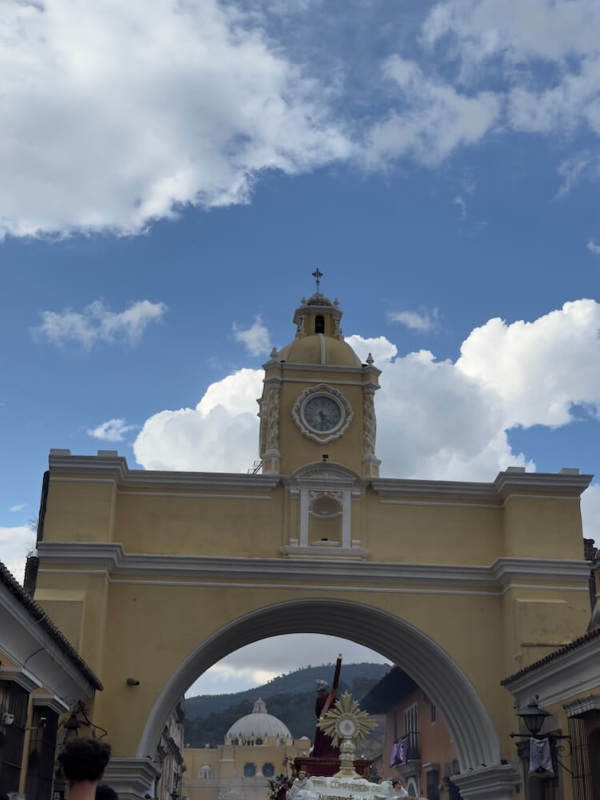
Antigua – Strong ⭐⭐⭐⭐⭐
The connection in Antigua was also very strong, and speeds were fast. The WiFi in my hostel wasn’t very good, and I relied on my BNESIM eSIM pretty much the whole time.
- Consistent 5G connection with Claro in the city center & tourist hubs for Google Maps & general social media
- Switched to 4G/LTE when driving out of the center

Lake Atitlan – Very Good ⭐⭐⭐⭐
When driving from Antigua to Lake Atitlan, I was surprised to see that the 4G/LTE signal remained for about 80% of the journey.
As we started to reach the lake, and were driving through rural villages at altitude, the signal did drop out at points (but this is pretty common in the highlands of Guatemala).
- Consistent 4G/LTE signal with Tigo
- WiFi can be patchy here, and there are regular power cuts, so I frequently use my BNESIM for 4k streaming, editing, or uploading (it’s slower than in the cities, but still better than WiFi)

BNESIM vs Airalo: Which is the cheapest travel eSIM provider?
If you’ve been researching the top travel eSIM providers, you’ve no doubt heard of Airalo.
Their flexible data packages and intuitive app make them a top eSIM choice for beginners looking for a no-fuss experience.
When deciding which eSIM provider is best for you, as well as price, there are some other important things worth considering –
- Network priority: Airalo is a marketplace rather than a direct cellular provider like BNESIM. This means that Airalo doesn’t always have the same “Tier 1” agreements as BNESIM, and speeds may be slower.
- Expiring plans: Unlike BNESIM, all Airalo data plans have an expiry date. This means you run the risk of purchasing a larger plan and wasting money on data you didn’t use.
- Just data: Airalo offers data-only packages, whereas BNESIM is a full communications suite, offering built-in VPNs, international calling, and virtual phone numbers.
- Smaller data packages: Airalo offers smaller packages than BNESIM, for as little as 3 days. If you’re only going on a short trip, this might be more convenient.
But which is the cheapest eSIM for travel? Here’s a table to help you compare the prices ⬇️
| Destination | Data Plan | BNESIM Price (USD) | Airalo Price (USD) | Cheapest Option |
|---|---|---|---|---|
| United Kingdom | 10 GB | $15.12 | $19.00 | BNESIM |
| Europe (Regional) | 20 GB | $29.12 | $48.00 | BNESIM (Save $18+) |
| Thailand | 20 GB | $10.07 | $18.00 | BNESIM |
| Guatemala | 10 GB | $58.24 | $41.00 | Airalo |
| Global Plan | 3 GB | $42.56 | $24.00 | Airalo |
⚖️ The Verdict
When comparing prices, BNESIM comes out as the undisputed king for the cheapest travel eSIM in Europe & Asia.
However, for Latin American destinations, where their “Tier-1” agreements aren’t as strong, their local and regional plans do come out with a higher price tag compared to Airalo.
If you’re considering a global package, Airalo is significantly cheaper, but only includes data and not the extensive communications suite offered by BNESIM.
While Airalo’s shorter-term plans may be better value for quick weekend getaways, BNESIM is much cheaper in the long term, and their non-expiry data means that you don’t waste money on unused data.
FAQs
Where is BNESIM based?
BNESIM is based in Hong Kong, but they have regional infrastructure and partnerships in 200+ destinations.
Is BNESIM legit?
BNESIM is absolutely a legit and reliable travel eSIM provider.
In fact, they won the title of “World’s Best Travel SIM Provider” at the World Travel Awards for four consecutive years (including 2025/2026).
After my experience using BNESIM eSIM in Guatemala, I can personally vouch for their signal strength, speed, and affordable prices.
Is BNESIM a VPN?
BNESIM is an eSIM provider, but you can also purchase their BNE Guard VPN as a powerful add-on for security and encryption on the road.
How to call using BNESIM?
If you want to use your BNESIM eSIM to make calls, simply download the VirtualSIM by BNESIM app.
On this app, you can use the integrated VoIP dialer rather than your phone’s typical dialer.
With your standard eSIM data package, the app uses that data connection (or Wi-Fi) to place high-quality voice calls to any landline or mobile number worldwide – simply pay the local rate per minute.
If you’ve leased a local ID, you can also choose which local phone number displays when you call out.
Is BNESIM free to use?
While it is free to download the BNESIM app, any services such as data, calling credits, VPN, or virtual numbers are paid for.
Does BNESIM allow hotspot?
Yes, BNESIM allows you to use your phone as a personal hotspot, which is great for digital nomads or professionals on the road.
However, hotspot is only available with capped data plans (for example, the 1GB, 5GB, or 20GB packages), and on their unlimited plans, hotspotting is blocked entirely.
BNESIM Review: Is This the Cheapest eSIM for Travel?
If you’re looking for the cheapest eSIM for travel in 2026, BNESIM is an extremely strong contender, especially in Europe & Asia.
If you need 10GB or 20GB to get you through a month of exploring, the price-to-performance ratio is unmatched.
Based on my experience in Guatemala, their prices in Latin America aren’t as competitive, and perhaps for shorter trips (a few days), other eSIM providers that offer smaller packages may be better.
That said, if you prioritize speed and connectivity and want the added benefit of their Virtual Office features, BNESIM is a no-brainer.
👉 Use code BIGBACKPACK for 10% off your first BNESIM purchase here
If you have enjoyed this BNESIM review, I would love to hear from you – drop me a comment below or reach out to me on Instagram or Pinterest!
Other eSIM Reviews📱
Best eSIM for International Travel – Top 6 Providers Tested & Compared
Ubigi – Best Jordan eSIM? My HONEST Ubigi Review (2026)
Sim Local – Sim Local Review (2026): Is This the Best UK eSIM for Tourists?